"Good games are not marked by their visual appeal, but rather their depth and ability to please gamers as participants of interactive media." - Yours Truly.
Chances are, if you are a gamer, you know at least ONE person in your circle of friends that has said something along the lines of the above. In this case, it is myself. As much as I wish this was 100% true, I do have to make an appendage to the stated claim - despite how much we may try to deny or overemphasize graphic's importance, it is the graphics (sometimes mainly the visual style/appeal) that can hook and sometimes keep gamers' attention. I am going to chronicle the Street Fighter series in juxtaposition to popular and competitive audiences reacting to the visual appeal of the games.
Street Fighter 4. The latest installment of Street Fighter is looking pretty good - not because of a high-end graphics engine, but because of a slick style and sharp presentation. Bright colors, vivid character expressions, flashy Ultra combo animations - all of these lend to a very satisfying visual experience. Because of this success in presenting the Street Fighter essence, the game is a hit with both competitive players and casual players. But it goes a little deeper than simply stating the game looks pretty. Gamers with HD televisions are lucky to have the full visual experience, as it is comparable to the arcade set up arcade players experience. Here, we see a congruency in the visual representation - both games look the same.
Let's take Super Street Fighter 2 Turbo, a 15 year old stalemate in the SF2 saga. It has stood the test of time because of its depth in competitive environments, not through casual popularity. In fact, most casual SF fans or fans of fighting games in general believe Street Fighter 2' Hyper Fighting is superior. While arguments of balance may come into play in this debate (this writer takes the viewpoint that SSF2T has the most varied gameplay which takes precedence over balance) what is important to note is the common casual complaints of the visual design of the game. The announcer's voice is always on top of the list, with more sophisticated complaints stemming at mixture of dated visuals with enhanced backgrounds, while others even going further to claim Hyper Fighting was a better looking game altogether. Jeff Gerstmann, slightly renown video game guru and reviewer, is a represenative of these complaints.
What is important to note here, and I apologize for not finding a better seque into this chunk of information, is the difference between an arcade setting, which is mostly dedicated to the competitive audience, and the console/home setting which is aimed at the casual audience. Arcade monitors display colors very differently from a regular tube TV - Colors tend to be brighter and any pixelation is "blinded" by the inherent scanlines on the arcade monitor. So we can possibly assess that SSF2T looks very different from arcade to console, no matter how perfect the port job or emulation is. Also note the atmosphere of the arcade - mostly dimly lit with loud music in the background and usually a substantial amount of games being played at once. Through this we see that it is more than likely arcade gamers won't even be able to hear the annoying announcer's voice and the brightly lit screen comes as even more vibrant against the dark shadows of the arcade cabinet. What we have are two clear illustrations of two different ways to experience the same game (save me the specifics, ST nerds), which brings about two different viewpoints on the game - casuals don't like ST while those who grew up in the arcade still play it today.
From SSF2T to SSF2T:HDR. To save on length of this article and time reading on development issues, HD Remix is a redrawn version of SSF2T with a new soundtrack, a pretty good netplay option, and a rebalanced mode catered to the hardcore fans. HDR fixes the problems casual gamers had with SSF2T's visuals and suddenly everyone is a fan of this dated classic. Even Jeff Gerstmann, although he is not saved by claiming his astonishment comes from smart balance changes (no one can say that the week a FG drops). HDR looks good for the casual audience and now it is a hit. Some might say it is the balanced mode that sealed the deal, but I'd wager that the casual players wouldn't care - a redrawn version of a Street Fighter game nobody played will seem like a new game regardless.
Lastly, Street Fighter III: 3rd Strike. A lot of people love this game. There is no denying the complexity, execution, and guessing-games in it that keep the game wildly popular among both casual and competitive fans. It does have complaints - many can be articulately stated by this man - which range from imbalance to nullification of SF-trademark fireballs, but it constantly builds in popularity. My proposed reasoning behind this phenomena - SF3 also looks really good on both arcade and console.
Fliud animation, big characters, vibrant colors and detailed stages (though not as much as 2nd Impact) all lend this game to being a showstopper. The first time I saw this game I was stunned; as a heavy player in ST, I still sometimes look at the game in awe in comparison to other fighters. Few 2d games look so good. Sure, GGXXAC has a more balanced, more vivid visual flare and a few new games (BlazBlue, KOFXII) might trump SF3 even more, but the balance between animation, ease of use (6 buttons as opposed to 4,5) is truly unmatched. Not only that, but despite a heavy anime influence in SF3, 3s is mature looking in theme and has a bad-ass announcer, which can't be said for SSF2T:HDR's dumbed down color scaling and autistic-sounding announcer. This isn't your brother's SF2 - this is SF3.
So, before closing, I want everyone to know that it was very hard for me to recognize these differences in graphical prowess and cultural semiotics - I am usually blind to that sort of thing. However, I don't think many people can argue againts my points, unless they have more confirmable data than I do. In that case, I fold.
Otherwise, happy gaming.
Tuesday, March 31, 2009

Tuesday, March 17, 2009
I Like Vanilla
Like sugar cookies, I find my taste buds flourish in simple sugary treats. The easy to digest glucose is nearly instantaneous and wonderful in every respect. Maybe that is why I really enjoy Vanilla ST over SSF2THDR.
Puns aside, it seems SSF2THDR has some balance issues. I had worries upon release of the game, but I didn't want to voice them lest any new developments came to the interweb news of Fighting Games. Unfortunately, I was correct in my worry - more developments have proved there are more hazardous matchups than I had anticipated.
I love ST. It isn't perfect, but goddamn it is fun and exciting. In no other game do I feel like Guile or Ryu, using offensive strategies to create defensive walls for my opponents to penetrate. Every single character has really interesting tools which set ST apart from a more balanced game, Hyper Fighting. It seems like David Sirlin and Seth Killian had this all in mind for HD Remix, more so than myself. While Sirlin wooed me by stating mesianic mission to balance ST more than it is already is, Seth had something different to say.
I can get behind Seth on this one, but I can't help but feel massively betrayed by Sirlin as well as sneakily beaten in logic by Capcom. You see, Akuma is still WAY too good in HDR. His hotboxes are just plain obnoxious. It would seem he is due for a patch or banning by the SRK community. But after Damdai's amazing pilgrimmage, the Evo heads are calling it all a bluff. Even after handily beating Valle and Choi online, still Mr. Wizard is against banning Akuma at Evo. We cry injustice - HDR is supposed to be "balanced." And here Seth tells us it doesn't have to be.
Fine. I'll buy all of it. I am cool with this injustice. Just don't fool me again, Capcom.
Puns aside, it seems SSF2THDR has some balance issues. I had worries upon release of the game, but I didn't want to voice them lest any new developments came to the interweb news of Fighting Games. Unfortunately, I was correct in my worry - more developments have proved there are more hazardous matchups than I had anticipated.
I love ST. It isn't perfect, but goddamn it is fun and exciting. In no other game do I feel like Guile or Ryu, using offensive strategies to create defensive walls for my opponents to penetrate. Every single character has really interesting tools which set ST apart from a more balanced game, Hyper Fighting. It seems like David Sirlin and Seth Killian had this all in mind for HD Remix, more so than myself. While Sirlin wooed me by stating mesianic mission to balance ST more than it is already is, Seth had something different to say.
I can get behind Seth on this one, but I can't help but feel massively betrayed by Sirlin as well as sneakily beaten in logic by Capcom. You see, Akuma is still WAY too good in HDR. His hotboxes are just plain obnoxious. It would seem he is due for a patch or banning by the SRK community. But after Damdai's amazing pilgrimmage, the Evo heads are calling it all a bluff. Even after handily beating Valle and Choi online, still Mr. Wizard is against banning Akuma at Evo. We cry injustice - HDR is supposed to be "balanced." And here Seth tells us it doesn't have to be.
Fine. I'll buy all of it. I am cool with this injustice. Just don't fool me again, Capcom.
Sunday, July 20, 2008
Super Turbo and I
After a long set with friends JMS and ehonda, I have to reassess my skill-set in Super Street Fighter 2 Turbo. I have improved in some areas, and gotten worse in others.
Let me put myself down before I state how I have come further in improvement -
My execution has gotten far worse than I remember. I used to be able to DP on reaction; reversal DPs were my weapons of mass destruction. Part of this is probably because I don't practice anymore - not having a ps2 or anyway to train stick techniques hurts my game I think. I am also branching out in playing other games, which makes it hard for me to keep track of what gameplay nuances I need to keep in mind.
My gameplan is highly habitual. I find myself not thinking and getting punished for dumb, repeated attack strings that just don't work. Hurricane Kick on block is not safe, yet I continue to do it, for reasons beyond my cerebellum. I need to break habits and play smarter, not harder.
I let my super go at very bad moments. My philosophy: I get super meter so fast I can afford to lose it and gain it again in the same round. The people I am playing, however, are very good and deserve better than that. I was only able to get a clean confirm on my Shinkuu Hadouken ONCE in my 5 hour session today. The other whiffs were blocked, for substantial chip damage, but I can do better.
What has improved:
I understand the game better. Matchups are clearer and I know what to do in situations that once puzzled me. In matches where I have no idea what to do, I am able to formulate my own attack plan and perfomr reasonably.
I am less tense in matches. I don't choke in close matches and I keep a level head the entire game. I tend to play safe in this mindset and frustrate players that way.
I have a very good tick throw/Overhead/fireball/DP trap that my friends are still trying to guess. It could be better, but it is pretty good right now.
I can detect when people are going to use super combos and either runaway or counter.
I now know exactly what people mean when they say "Jab Strong Fierce Short Forward Roundhouse." I always knew what they represented, but it used to take me a few seconds to translate them to lp mp hp etc.
So I am frustrated that I got better by getting worse, but I assume no learning is without its plateaus. I hope to get better in the coming weeks and report my progress with footage and response.
Let me put myself down before I state how I have come further in improvement -
My execution has gotten far worse than I remember. I used to be able to DP on reaction; reversal DPs were my weapons of mass destruction. Part of this is probably because I don't practice anymore - not having a ps2 or anyway to train stick techniques hurts my game I think. I am also branching out in playing other games, which makes it hard for me to keep track of what gameplay nuances I need to keep in mind.
My gameplan is highly habitual. I find myself not thinking and getting punished for dumb, repeated attack strings that just don't work. Hurricane Kick on block is not safe, yet I continue to do it, for reasons beyond my cerebellum. I need to break habits and play smarter, not harder.
I let my super go at very bad moments. My philosophy: I get super meter so fast I can afford to lose it and gain it again in the same round. The people I am playing, however, are very good and deserve better than that. I was only able to get a clean confirm on my Shinkuu Hadouken ONCE in my 5 hour session today. The other whiffs were blocked, for substantial chip damage, but I can do better.
What has improved:
I understand the game better. Matchups are clearer and I know what to do in situations that once puzzled me. In matches where I have no idea what to do, I am able to formulate my own attack plan and perfomr reasonably.
I am less tense in matches. I don't choke in close matches and I keep a level head the entire game. I tend to play safe in this mindset and frustrate players that way.
I have a very good tick throw/Overhead/fireball/DP trap that my friends are still trying to guess. It could be better, but it is pretty good right now.
I can detect when people are going to use super combos and either runaway or counter.
I now know exactly what people mean when they say "Jab Strong Fierce Short Forward Roundhouse." I always knew what they represented, but it used to take me a few seconds to translate them to lp mp hp etc.
So I am frustrated that I got better by getting worse, but I assume no learning is without its plateaus. I hope to get better in the coming weeks and report my progress with footage and response.
Thursday, June 5, 2008
Updates Are My Bane
But in other news...
I have a youtube account chronicling my progress as a SF2 player and video game thinker/reviewer. So far I have reviews of Star Soldier R, House of the Dead and SF2 matches. Oh, and a surprise for my lady friend.
I also have a newly written review for one of my favorite video games of all time, The Revenge of Shinobi for the Sega Genesis.
And that's all for now. Expect more updates soon!
I have a youtube account chronicling my progress as a SF2 player and video game thinker/reviewer. So far I have reviews of Star Soldier R, House of the Dead and SF2 matches. Oh, and a surprise for my lady friend.
I also have a newly written review for one of my favorite video games of all time, The Revenge of Shinobi for the Sega Genesis.
And that's all for now. Expect more updates soon!
Monday, April 7, 2008
The Competition

Because of my lack of updates and inability to update on designated dates, I am posting this editorial in hopes for an exoneration. To what will probably many reader's dismay, I am not going to dissect any recent gaming news, but instead address an issue that is problematic in the communication between gamers and developers:
Value systems.
What I mean by "value systems" stems from political, moral and cultural history of a people, but plays no less an important role in the video game industry. Specifically, when a people plays a video game, their reactions and opinions to the said medium are completely based on their value systems which are orchestrated by outside forces. No matter what sources tell you, there is no unbiased, objective review of any digital media. We should know this from opinions on art and music, which have defused to being strictly industries of critiques rather than consumer reports.
From this comes the cliche "Everyone is entitled to their own opinion." A true statement that illuminates an ideal no one would want to be robbed, yet a predicament revolves around this. What is quality? What is good or bad? Surely subjective questions, yet industries thrive on imposing on a people exactly what fits in each category. People assuming they know exactly what "quality" means in a video game is then the springboard for which future video entertainment is made; for further proof see every action movie produced after The Matrix.
So a people says "we like it" and an industry creates more. The people who say "we don't like it" have to have a stronger voice at times to counter the others, and sometimes it is vice versa. To examine such a phenomenon, I am going to take two different video games, yet of the same name, and examine their reception and possible counter points. These games are both aptly titled Sonic The Hedgehog 2 for Sega Genesis (Mega Drive) and Game Gear / Master system.

In 1992, Sega stole the majority market share from Nintendo with its release of Sonic 2 for the Sega Genesis. The game, developed by Yuji Naka, broke most of the rules of its predecessor in order to feed gamers their thirst for fast gameplay via "blast processing." The game is marked as Sonic's high point in the series and even today it has its large share of fans. The game was of simple mention - hold forward for 20 minutes, learn to jump at the right times, and have a blast watching your blue sprite fly across the screen in creative ways. Marked with the "rings" mechanic and special stages, the game was undeniably of a different mold than its mario counter-part. Among its differences lie difficulty, in which Sonic 2 almost has none. After a few trials, a player can expect to see the ending fairly quickly. Getting all the chaos emeralds with Sonic unlocks Super Sonic, which makes the game relatively easier with exception to a few points in the later levels. After that, the game has been fully explored. Yet the game is ranked as one of the best Sega games created.
Zoom back several months earlier and you have Sonic 2 for the Master System. An entirely different breed of game, it sets to take the fundamentals of the original and expand upon it. Due to the lack of graphic intensive hardware, pseudo-3D stages are non-existent and the game travels at a slower pace. The game no longer reaches the eye-candy bliss its son would soon outdo, but more or less creates a solid platforming experience. Its release in Europe met much praise and love from fans.
The game was also released America via Game Gear as a port. Trimmed down considerably in resolution, the game met anger among Sonic fans in the US. Common complaints arose among all Game Gear owners - the controls were sloppy, the screen was too small, one couldn't play as Tails, the game was "too hard." First, let's examine the last aspect of this list before delving into possible explanations for this divide in opinion.
What is "too hard?" I know not one person qualified to answer the question, yet I find issues in its vagueness. Too hard in comparison to what? Sonic 2 Genesis? Of course then, because Sonic 2 is a forward romp. Contra games have been known to be more less forgiving, yet no one in that crowd will say a Contra game is too difficult. Sonic 2 Game Gear can in fact be beaten, so there is no argument to say it is impossible. This then falls on a gamer's determination to complete the task before them. Is it easier to moan and perhaps allocate funds to a prettier, more visually rewarding experience? Perhaps. But to a people who decide not to take this route, little bickering will be found and instead be replaced with smiles and bittersweet memories that were not wasted.
To be fair, the Game Gear version of Sonic 2 is not the same as the Master System version. The game screen is cropped and in many circumstances the developers did not choose to compensate for it. Because of this issue, it is difficult to see any obstacles in advance and the game becomes a test of trail, error and memorization. Added to this the complaint that, despite the blatant advertisement on the box art, title screen and Zone introductory screens, Tails is not playable. The game doesn't state a false claim in its "Sonic The Hedgehog 2 - With Tails," but merely makes a suggestion gamers took literally. Since the same name was titled to a game that did have Tails playable, such aggravation is understandable. But even that complaint is in congruence with the other arguments for Sonic 2 GG's flaws, which are completely subjective to cultural constructs that founded a framework all critics use. The main point - comparison is a fine line for use in critical arguments when the clarity in developer's intentions is muddy.
As you can tell, my language in this piece is vague and based on opinion, just as are others that claim such positions as facts. Something to ponder next time you read a review on any media.
Monday, March 24, 2008
Friday, March 14, 2008
All Things Pink

This week I was on a mission - after reading reviews and contemplating with my other, I decided to get a DS and Contra 4. I thought it was clear; other agendas were in order however. The end result was depressing. No Contra 4. No Hardcorednessessess. My DS is now pink.
Not one to let minor obstacles get in the way (stubborn), I ended up spending some savings on a new copy of Contra 4 at Gamestop the next day. Please note, according to Gamestop, a new product is still new even if the seal is broken, has tears in the game manual and the case is lopsided. Nonetheless, much rejoicing was had. Contra 4 was had. My DS is still pink.
Contra 4 is actually an astounding game. Along with Sonic Rush Advanture and Zelda, this is my favorite DS game in my collection (currently shared with evil-doer who decided everything should be reddish-white). The game is the epitomy of what all video games should be - over the top difficulty, responsive and intuitive controls, and crazy action. The music, composed by VGmixer Jake Kaufman, should also be noted as being melodic and fresh while remixing old pieces from the series. If you own a DS, you should also own this game simultaneously. Even if it is pink.
This is actually my first Contra game and I am almost ashamed of what made me want to buy it - the kick ass cover art. Gone are the anime-esque finger hand gestures to the viewer. Here we have excellent eye candy with action being drawn in the picture without any actual design of violence. As a huge fan of Old School gaming (long time competitor of Street Fighter and other fighting games), it is pretty blasphemous that I never was a Contra fan. I love Ikaruga and most of Treasure's other great shooters, but never did I delve in this series. It was the fact that OG games were still being produced did I decide to give it a go, in which now I am a fan.
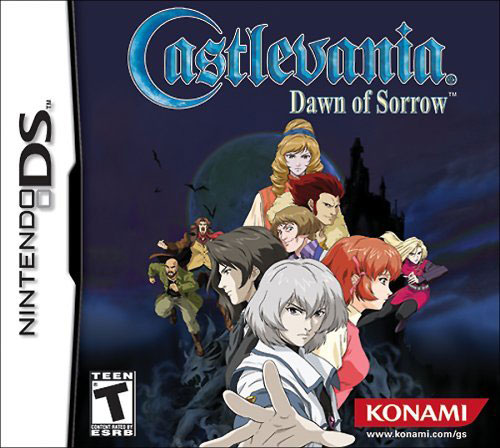
With the advent of SSF2T HD Remix and Bionic Commando making a come back, old-school gaming still has life left in it. I recommend Contra 4 to anyone interested in the genre, even if you aren't accustomed to difficult games.
In other news, the previously mentioned SSF2T HD Remix (which will now be referenced as STD both for shorthand and humorous reasons) is going to be available as an 8 week beta with the release of Commandos 3. 8 weeks of Ryu and Ken matches online. This is going to piss off some people. But the intent is to test and troubleshoot the online robustness, so it seems fine for that purpose. The new look features 4 shades as opposed to 8, which is due to Capcom being lazy and wanting a product to be finished rather than look amazing, which I can understand. I prefer the darker tones of the original ST, but from an artistic standpoint the game looks really good, albiet it confused with a project created by more talented artists. The game in motion looks solid, although Ryu and Ken's idle stance demonstrates a tremendous bounciness not found in other games. Methinks someone didn't collaborate the right sprites in order, but that is just me. The music is fine, although certain tracks are ripped from a great remix project that I wholeheartedly love. Just not in the game. CPS2 soundtrack for me on this one.
The play testers in the videos, to put it kindly, suck at SF. I await being able to play this, showing people online the importance of zoning and spacing and execution and the broken fake fireball. Please note Sirlin's interviews on Gamespot's website - he explicitly describes exactly how NOT to rebalance a fighting game. I can't wait to be proven wrong when this (re)releases in Summer of 2008.
Iapetus out.
Subscribe to:
Posts (Atom)