Monday, March 24, 2008

Friday, March 14, 2008
All Things Pink

This week I was on a mission - after reading reviews and contemplating with my other, I decided to get a DS and Contra 4. I thought it was clear; other agendas were in order however. The end result was depressing. No Contra 4. No Hardcorednessessess. My DS is now pink.
Not one to let minor obstacles get in the way (stubborn), I ended up spending some savings on a new copy of Contra 4 at Gamestop the next day. Please note, according to Gamestop, a new product is still new even if the seal is broken, has tears in the game manual and the case is lopsided. Nonetheless, much rejoicing was had. Contra 4 was had. My DS is still pink.
Contra 4 is actually an astounding game. Along with Sonic Rush Advanture and Zelda, this is my favorite DS game in my collection (currently shared with evil-doer who decided everything should be reddish-white). The game is the epitomy of what all video games should be - over the top difficulty, responsive and intuitive controls, and crazy action. The music, composed by VGmixer Jake Kaufman, should also be noted as being melodic and fresh while remixing old pieces from the series. If you own a DS, you should also own this game simultaneously. Even if it is pink.
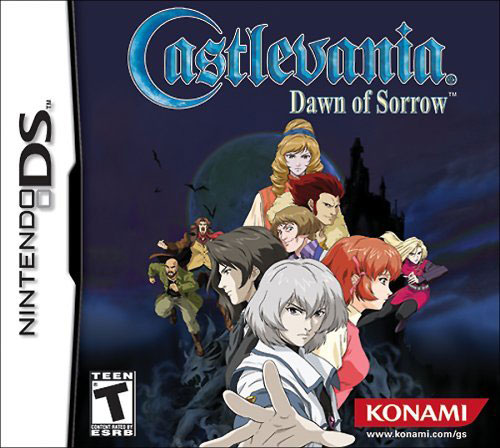
This is actually my first Contra game and I am almost ashamed of what made me want to buy it - the kick ass cover art. Gone are the anime-esque finger hand gestures to the viewer. Here we have excellent eye candy with action being drawn in the picture without any actual design of violence. As a huge fan of Old School gaming (long time competitor of Street Fighter and other fighting games), it is pretty blasphemous that I never was a Contra fan. I love Ikaruga and most of Treasure's other great shooters, but never did I delve in this series. It was the fact that OG games were still being produced did I decide to give it a go, in which now I am a fan.
With the advent of SSF2T HD Remix and Bionic Commando making a come back, old-school gaming still has life left in it. I recommend Contra 4 to anyone interested in the genre, even if you aren't accustomed to difficult games.
In other news, the previously mentioned SSF2T HD Remix (which will now be referenced as STD both for shorthand and humorous reasons) is going to be available as an 8 week beta with the release of Commandos 3. 8 weeks of Ryu and Ken matches online. This is going to piss off some people. But the intent is to test and troubleshoot the online robustness, so it seems fine for that purpose. The new look features 4 shades as opposed to 8, which is due to Capcom being lazy and wanting a product to be finished rather than look amazing, which I can understand. I prefer the darker tones of the original ST, but from an artistic standpoint the game looks really good, albiet it confused with a project created by more talented artists. The game in motion looks solid, although Ryu and Ken's idle stance demonstrates a tremendous bounciness not found in other games. Methinks someone didn't collaborate the right sprites in order, but that is just me. The music is fine, although certain tracks are ripped from a great remix project that I wholeheartedly love. Just not in the game. CPS2 soundtrack for me on this one.
The play testers in the videos, to put it kindly, suck at SF. I await being able to play this, showing people online the importance of zoning and spacing and execution and the broken fake fireball. Please note Sirlin's interviews on Gamespot's website - he explicitly describes exactly how NOT to rebalance a fighting game. I can't wait to be proven wrong when this (re)releases in Summer of 2008.
Iapetus out.
Friday, February 22, 2008
Balancing ST - A New Game
As most fighting game enthusiasts are aware, Super Street Fighter 2 Turbo is being redrawn in full HD sprites, thanks to Udon Entertainment of Street Fighter comic fame. Included in this are two games - Classic ST and the new rebalanced Remix mode. This mode aims to make an already tremendously balanced game become even more so, along with giving the 17 fighters (Akuma included) new toys to play with. David Sirlin, accomplished competitor and tournament organizer of the Evolution International Fighting Game Championships, is leading the programming team that will make the gameplay changes and has given a substantial amount of information to the fighting game community regarding those changes. His main goal is to leave the top tier alone, give some new toys to the mid tier and boost the low tier as much as possible while still making the game fun. While I completely disagree with this mindset, what this does is give gamers a new Street Fighter 2 game - the 6th or 7th game in the series (Depending 0n if you counted HSF2 as title in the series).
One of the first changes announced regarding gameplay tweaks to specific character pertained to Ryu. By adding a fake fireball to Ryu's arsenal, Sirlin believes Ryu will still be a powerful high tier character while having more options in match ups that give him trouble, such as Sim. As a Ryu player, I recognize that Ryu is one of the most perfect characters in ST - he has no weaknesses, has a great fireball and anti-air and has one of the best supers in the game. He isn't top tier, but he doesn't need to be to win tournaments; looking at tiers and trying to balance a game as such is simply ignorant of a more important factor to game balance - match ups. Ryu has few bad match ups and even those are completely winnable. In the Sim match up, Ryu has to completely rely on UmeShoryu (Psychic Dragon Punch) in order to punish Sim's limbs. This becomes a very intense match for Ryu because there is tremendous risk in whiffing a DP. The match is far from unwinnable and many great Ryu players (John Choi, Daigo Umehara, ShootingD) have won finals against top Sim players. Giving Ryu the fake fireball takes away the fun intensity of the match and makes Sim play even more carefully. Sim players look for the fireball animation as a hint to punish, but if Ryu has a fake fireball, Sim will never take that chance. Also, as Zass pointed out in his blog, if Ryu's fake FB builds meter, the game has become Third Strike. ST is known for aggressive gameplay, not turtling in a corner to gain meter. While the latter is a viable option, it is rarely used as the best defense is a good offense in ST. Building meter through a fake FB makes Ryu's gameplan very boring, as part of his strategy is landing his super. The magic of a great Ryu player is utilizing a great mix-up plan in order to have meter to land super, which will no longer be there if Ryu can sit in a corner and gain meter all day.
The fake FB not only makes the match against Sim less fun, but also will destroy other characters who already have a difficult time around projectiles, specifically E.Honda. In that match up, any awake ryu player can shut down the best Honda players. While it is said Honda will get new tools, it is unlikely he will be able to compete against a fake FB. What this illuminates is the idea that every fighting game is a Jenga puzzle - changing one thing could make the product as a whole collapse. As Sirlin stated he wanted to make a "new" game, it quickly became apparent that this new game could be less balanced than Classic ST. The intent is there, but the procedure I think is wrong. If you want to look for a very intelligent way of balancing ST, click here to view Zass's post regarding the subject.
There is still a divide among the SF2 hardfore fans about the changes being made. While I tend to be on the side of "leave the game alone," I think the issue becomes a difference in goals between the gamers and the developers. Many people who do want changes made to ST desire a better game - ST has been competitively played for 14 years, a record no other fighting game has and is proof that ST is an astounding game of wit, strategy and execution. The game is not without fault, however, so it seems understandable to make changes to it. The super reversal glitch for Ken, Sim and Sagat; randomness in damage and combo execution; certain character match ups, etc. These aspects deserve to be addressed and from this gamer's opinion, are the only changes needed to be made to an otherwise perfect fighting game. David Sirlin would beg to differ.
One of the first changes announced regarding gameplay tweaks to specific character pertained to Ryu. By adding a fake fireball to Ryu's arsenal, Sirlin believes Ryu will still be a powerful high tier character while having more options in match ups that give him trouble, such as Sim. As a Ryu player, I recognize that Ryu is one of the most perfect characters in ST - he has no weaknesses, has a great fireball and anti-air and has one of the best supers in the game. He isn't top tier, but he doesn't need to be to win tournaments; looking at tiers and trying to balance a game as such is simply ignorant of a more important factor to game balance - match ups. Ryu has few bad match ups and even those are completely winnable. In the Sim match up, Ryu has to completely rely on UmeShoryu (Psychic Dragon Punch) in order to punish Sim's limbs. This becomes a very intense match for Ryu because there is tremendous risk in whiffing a DP. The match is far from unwinnable and many great Ryu players (John Choi, Daigo Umehara, ShootingD) have won finals against top Sim players. Giving Ryu the fake fireball takes away the fun intensity of the match and makes Sim play even more carefully. Sim players look for the fireball animation as a hint to punish, but if Ryu has a fake fireball, Sim will never take that chance. Also, as Zass pointed out in his blog, if Ryu's fake FB builds meter, the game has become Third Strike. ST is known for aggressive gameplay, not turtling in a corner to gain meter. While the latter is a viable option, it is rarely used as the best defense is a good offense in ST. Building meter through a fake FB makes Ryu's gameplan very boring, as part of his strategy is landing his super. The magic of a great Ryu player is utilizing a great mix-up plan in order to have meter to land super, which will no longer be there if Ryu can sit in a corner and gain meter all day.
The fake FB not only makes the match against Sim less fun, but also will destroy other characters who already have a difficult time around projectiles, specifically E.Honda. In that match up, any awake ryu player can shut down the best Honda players. While it is said Honda will get new tools, it is unlikely he will be able to compete against a fake FB. What this illuminates is the idea that every fighting game is a Jenga puzzle - changing one thing could make the product as a whole collapse. As Sirlin stated he wanted to make a "new" game, it quickly became apparent that this new game could be less balanced than Classic ST. The intent is there, but the procedure I think is wrong. If you want to look for a very intelligent way of balancing ST, click here to view Zass's post regarding the subject.
There is still a divide among the SF2 hardfore fans about the changes being made. While I tend to be on the side of "leave the game alone," I think the issue becomes a difference in goals between the gamers and the developers. Many people who do want changes made to ST desire a better game - ST has been competitively played for 14 years, a record no other fighting game has and is proof that ST is an astounding game of wit, strategy and execution. The game is not without fault, however, so it seems understandable to make changes to it. The super reversal glitch for Ken, Sim and Sagat; randomness in damage and combo execution; certain character match ups, etc. These aspects deserve to be addressed and from this gamer's opinion, are the only changes needed to be made to an otherwise perfect fighting game. David Sirlin would beg to differ.
Thursday, January 10, 2008
The Greatest Game No One Played

In the video game industry, there are winners and losers. This applies to gamers, as they flounder and triumph in ways that would make Samuel Beckett proud. Taken out of the closed system of rules in a single video game, gamers also win and lose from a mere economic standpoint. Video game players purchase games that promise to be “fun”; whatever the gamer perceives as “fun” is exactly what they will be looking for in visual-interactive entertainment and no two gamers will be exactly alike. Websites and magazines review games and try to predict what will be “fun” for most gamers and wrongly assumes that there is one exclusive type of “fun.” While romantically ideal, this reviewing system is rather flawed in more ways than one can count and a significant number of gamers choose to ignore it for valid reasons. While commendable those gamers are for being iconoclasts in a capitalistic market working to create sameness, there are a few small (large) cases where this actually hurt the gaming community.
Like every other entertainment medium, video games shares its vast amount of cults and cult followers – those who adhere to certain ideas, beliefs and desires that go against the machine that is capitalism and normality (sameness). They are small groups, ones who detest that Final Fantasy 7 is in fact NOT the greatest RPG ever made; others stating Sonic the Hedgehog 1 was better than Sonic 2, etc. While these groups are trying to change the populace of gaming by showing their opinions are counter to mass video gaming culture, it is mostly an expression of being an individual. While one of my favorite video games of all time is Street Fighter 2, I feel honored to still be in the competitive arcade scene to this day while others mark themselves as casuals or old-timers. Being different, for myself and others who sway from the norm, feels rather good and it benefits us. There is one specific case where, at least in my opinion, this drive to be different actually damaged the Video Game industry in the respect of game innovation and “fun”; the game reviewing system and the market all drove us to counter something that actually was good in every respect, but our angst got the better of us. This is related to one game in particular which appeared on the Sega Genesis/Mega Drive in 1993: Rocket Knight Adventures.
Before I continue, let me first state that, yes – there are hundreds of amazing games that got ignored by the public. Ikaruga, Ristar, Sin & Punishment, Soldier Blade, Shatterhand – all examples of stellar gameplay fused with incredible presentation that were ignored because it was either overshadowed by something else, wasn't marketed correctly, or gamers decided such a game couldn't compete with the rest well-marketed great games of that time. This is a shame, but all of those games have gathered a healthy cult following and have slowly been recognized as being great games – in a small way, gamers have been redeemed for retrospectively acknowledging dismissed games and putting them on the pedestal they deserve. In doing so, gamers receive the best reward one can get for acknowledging greatness – the emergence of either the game series' continuation or other games that take the fantastic gameplay mechanics of others and twist it, making the game industry innovative and fun again. Rocket Knight Adventures, while having a strong but small fan base, has not received this.
At the time seen as a shameless knockoff of the anthropomorphic-attitude trend conquering the early 90's, Rocket Knight Adventures was the conjuration of a mascot idol framed along a hair-frenzying adventure of Contra-esque proportions. It is of no surprise that it was developed by the company that is famous for such ingenious games – Konami. Konami, after making lackluster ports to the Genesis that were either bettered on the Super Nintendo or didn't appear anywhere else due to quality control created an exclusive for the Genesis. The cover doesn't sport the famous black and white gridlines or the later red spines that encompassed the essence of Genesis games, but rather it presents itself as a rebel and something special. Nonetheless, despite rave reviews, it was ignored. Two sequels appeared, one for SNES and another for Genesis, trying to widen its audience base Konami changed the gameplay mechanics of the latter games in order to appease newcomers. Again, mostly ignored. The name of both games was Sparkster - the SNES version lending itself to Sonic-like gameplay (hold down right on the d-pad and jump frequently) and the Genesis version was perhaps the most different among the series, with a larger emphasis on puzzles/adventuring and toning down the difficulty even more considerable than its SNES counterpart. Both panned for not being like the original (the game people didn't buy) and all three games dropped into the Video Game abyss as other mascots took its rightful glory.
This isn't review of the game entirely, but Rocket Knight Adventures is one of the most unique, tight and incredible gaming experiences ever created. Everyone who spends just a few minutes with the game walks away agreeing with the above statement and will often wonder why we haven't seen the rocketeering possum in the 21st century. The blame rests solely on us video gamers who ignored the game when it was released. We forget that as consumers, we control the markets we participate in. We complain that there isn't enough innovation or freshness in video games of the 21st century, but the sad reality is that we don't want it. We see innovation and it gets panned for being too different. We are a people of sameness and it is a shame that fate that destroyed potentially the most exciting game series of all time. We could be playing games of adventure and challenge – ones that take use to underground caverns and a few seconds later ask us to fly away into space. Instead, we have “mature” games using “mature” themes and”mature” graphics – whatever that means. If more blood, profanity and mundaneness is mature, then call me a child.
Rocket Knight Adventures is one of the best video games of all time. If it doesn't get a revival, the least it can do is be ported to Wii Virtual Console or XBLA so gamers can be in sad remorse over the amazing mascot we all turned down. Sparkster, you are in our hearts.
Subscribe to:
Posts (Atom)